
On the nineteenth of March, the feast of Saint Joseph, Sicilian families build something found nowhere else: la tavola di San Giuseppe, a table laid as an altar, heaped with bread and food, and shared with neighbours, strangers and anyone in need. Here is where the custom comes from, what goes on the table and how it crossed the ocean.
A promise kept
The story told in Sicily is of a drought in the Middle Ages, when the rains failed and the crops died in the fields. The people prayed to Saint Joseph and promised that if the rain came they would lay a feast in his honour and share it with the poor. The rain came, and the one crop that had held on through the dry months, the fava bean, kept the island fed until the harvest. The table has been laid every March since, as thanks.
What goes on the table
The table is built in tiers, with a picture or statue of Saint Joseph at the top, and covered with flowers, lemons, oranges and candles. The heart of it is bread, baked for days beforehand into shapes: Joseph's staff, his beard, a carpenter's tools, crosses, hearts and wreaths, some of them so finely worked they are kept rather than eaten. Around the bread go fennel, artichokes, frittatas, fish and the sweets of the day, the sfinci and zeppole di San Giuseppe filled with ricotta or cream. There is no meat, because the feast falls in Lent.
Sawdust and the lucky bean
The pasta served that day is often finished not with cheese but with toasted breadcrumbs, the mollica, scattered over it to stand for the sawdust of Joseph's workshop. And every guest is given a dried fava bean to take home. Kept in a wallet or a pantry, it is said that the house that keeps one will never go without bread.
The door is open
The table is not for the family alone. The custom is that anyone may come in, and in many towns the poor, the elderly and children dressed as the Holy Family are served first and seated before anyone else. In some villages the day still begins with a knock at the door: the children playing Joseph, Mary and the child ask for shelter, are turned away twice, and are let in on the third knock, to the first seat at the table.
Across the ocean
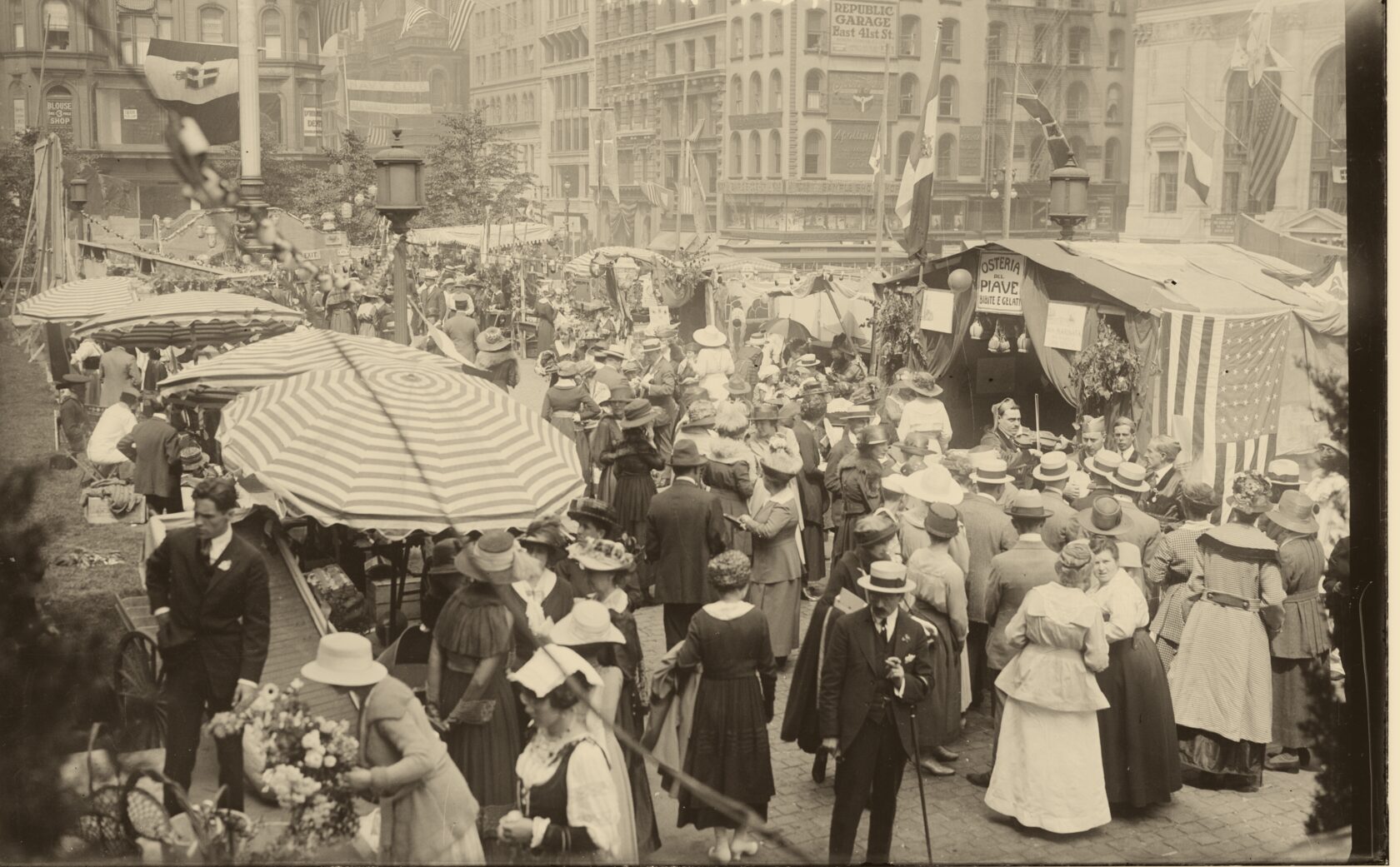
The Sicilians who emigrated to American cities brought the table with them and never stopped laying it. In New Orleans, where Sicilian families settled in large numbers in the late nineteenth century, Saint Joseph's altars still appear every March in churches, homes and shops, open to the public, and the fava beans are handed out at the door. Italian parishes in Brooklyn, Chicago and Buffalo keep the same custom. In Italy the day is also Father's Day, the festa del papà, since Joseph is the patron of fathers.
The table and the family
The table of Saint Joseph is the famiglia at its most generous: a promise kept for centuries, a meal that has room for everyone, and the head of the family at the door welcoming them in. A La Famiglia di Sicilia certificate is a title of that family, Soldato, Capo or Don, sealed with the family rose, and a fine gift for a father on the nineteenth of March.