

Sicily is the largest island in the Mediterranean and sits almost dead in the middle of it, which is the whole of its history in one sentence. Every power that wanted the sea wanted Sicily first. Most of them got it for a while, and every one of them left something behind on the island, in the food, the stone, the words and the families.
The Greeks
Greek colonists began arriving in the eighth century before Christ. Settlers from Corinth founded Syracuse around 734 BC, and within a few centuries it was one of the greatest cities of the Greek world, rich enough to defeat an Athenian invasion and to keep Archimedes busy defending its walls. The temples they built still stand at Agrigento, Segesta and Selinunte, better kept than most of the ones in Greece.
Rome's first province
Rome took the island from Carthage in 241 BC, at the end of the First Punic War, and made it the first province it ever governed outside the Italian mainland. Sicilian grain fed the city for centuries. When the empire in the west fell, the island passed to the Vandals, the Goths and then the Byzantines, who held it for three hundred years.
The Arabs and the Normans
From 827 Arab armies from North Africa took the island town by town, and Palermo, captured in 831, became one of the largest and most cultivated cities in Europe. They brought irrigation, citrus, sugar cane and a good part of the Sicilian kitchen. In 1061 Norman knights crossed from the mainland, and by 1091 they held the whole island. In 1130 Roger II was crowned King of Sicily in Palermo, ruling over Latins, Greeks and Arabs alike from a court whose chapels are still covered in gold mosaic.
The Vespers, and Spain
On Easter Monday 1282 the people of Palermo rose against their French rulers in the revolt remembered as the Sicilian Vespers, and the crown passed to Aragon. For most of the next five centuries Sicily was governed in the Spanish manner, by viceroys sent from a distant court, and Spanish court style took root deep in the island. That is how the courtesy of Don came to Sicily, along with the baroque churches and a lasting taste for ceremony.
Garibaldi, and Italy
In May 1860 Giuseppe Garibaldi landed at Marsala with a thousand volunteers, took the island in weeks and the whole south of the peninsula in months, and handed it to the King of Piedmont. The Kingdom of Italy was proclaimed in 1861, with Sicily in it. Within a generation hard times sent hundreds of thousands of Sicilians across the ocean, and the island's customs went with them to new neighbourhoods in American cities.
The land itself
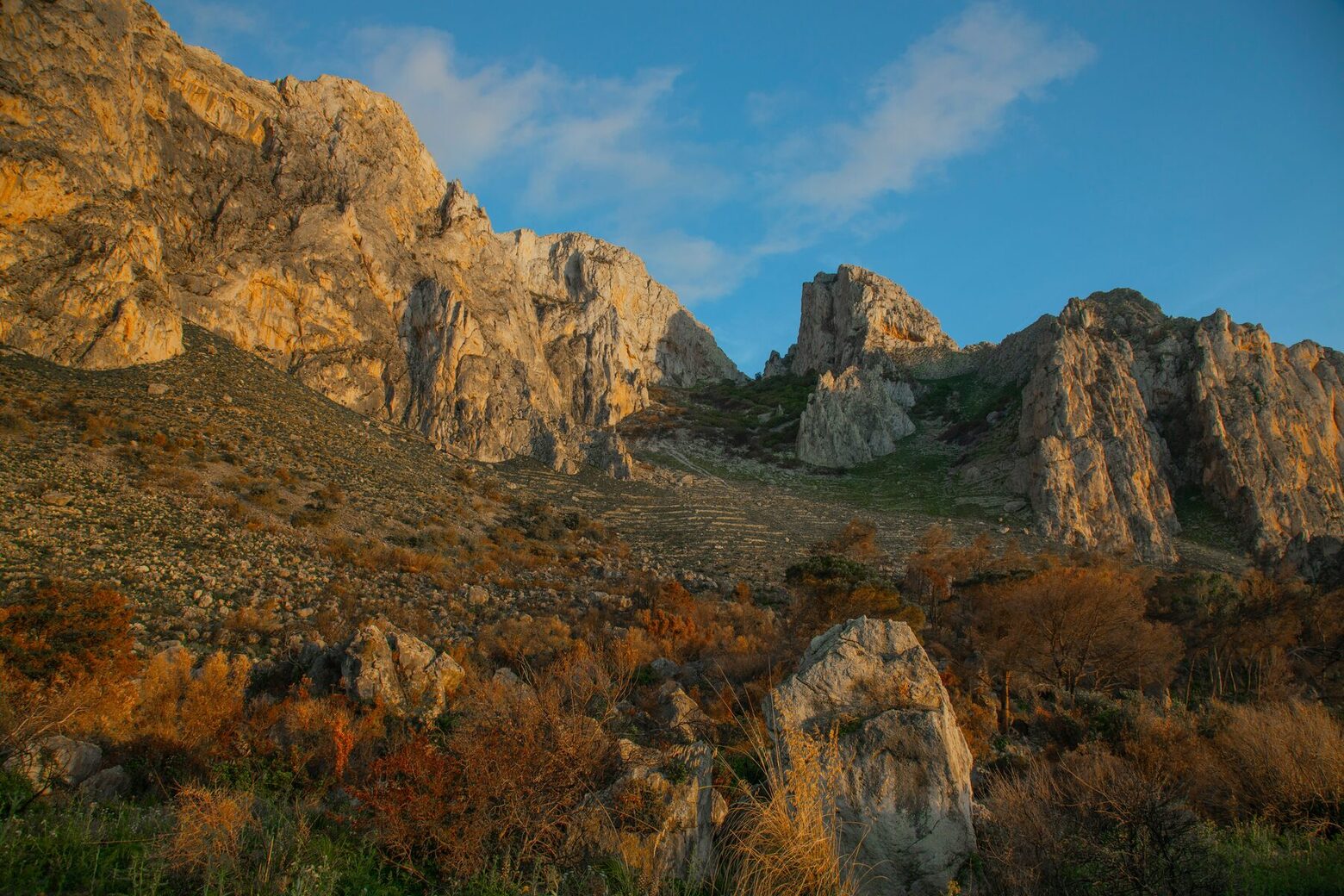
Behind the history is the island, and the island is mostly hills. Lemon groves along the coasts, wheat on the high interior, vines on the slopes of Etna, and on the east coast, in the hills above the Ionian Sea north of Taormina, the ground our own dedications name, with the volcano smoking on the horizon.
The end of the titles
Sicily became an autonomous region in 1946, and in 1948 the Constitution of the new Republic declared that titles of nobility are no longer recognised. The princes and barons of the island's great houses lost their standing in law. What remains is the courtesy that needed no constitution: the Dons and the Donnas of every Sicilian family, called that by the people who love them.